
SEATING / CONTACT FORCE SENSING
FSR Sensor Design for Seats and Cushions
Define the positions and states you need to detect when someone sits down.
Start a seat-sensing project by separating occupancy detection, local force change and acquisition at multiple positions. Then define the film position between the cover, foam and support. Baoshengda can review geometry, sensing areas, tails and terminations from your seat drawing and assess prototypes under conditions close to the final cushion. The heatmap on this page is a concept illustration.
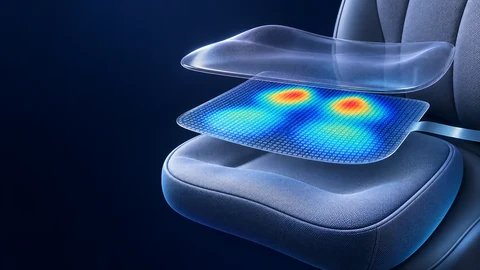
Separate three different tasks
- Occupied or unoccupied
- Define the state, loading range and decision conditions. Cushion dimensions alone are not enough to select a film.
- Local force change
- Define the observation position, contact area and comparison method while keeping foam and support conditions fixed.
- Multiple sensing positions
- Provide position and channel requirements before assigning film, circuit and acquisition responsibilities. A heatmap is not a default output from a standalone sensing film.
Mark these items on your seat drawing
- The cover, foam and rigid-support stack, with the proposed sensing-film layer.
- Main contact areas, preload sources, fixing method and permitted local deformation.
- Tail exit, bend space and connector position. Prevent tension from being transferred directly into the sensing area.
- The existing controller, sampling interface, supply and channel requirements.
Use real samples to review geometry and routing
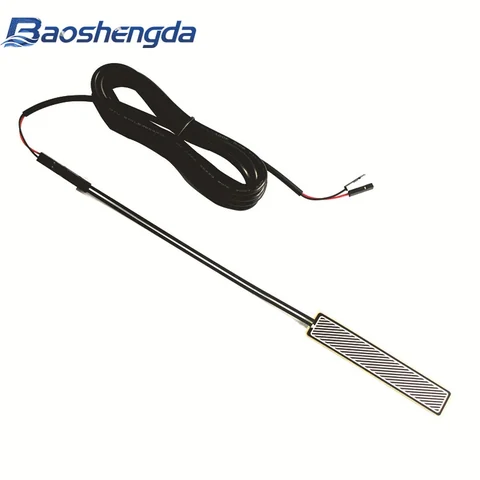
The sensing end, tail and cable must fit the contact position, available space and connection direction. The actual sample below supports geometry and connection discussions. The sensing area and specifications for your project are confirmed during drawing review.
Evaluate the sample inside the actual cushion
Use a cover, foam, support and readout arrangement close to the final product. Record each change so that assembly effects can be separated from changes in the sensing film.
- Agree loading, unloading, hold and recovery steps, and record raw readings.
- Assess repeatability, loading-versus-unloading differences and changes during sustained loading as separate observations.
- Record sample IDs, drawing revisions, assembly adjustments and abnormal conditions.
Seat project questions
What should we prepare for basic occupancy detection?
Provide the cushion stack, proposed sensor location, preload and the state to be detected. We can then discuss sensing area, trigger conditions and readout electronics.
Can a film directly output a pressure heatmap?
A heatmap requires sensing at multiple positions, acquisition electronics and software. Define the areas and channels first, then agree the sensing-film and system scope.
Do we need to revalidate after changing the foam?
Yes. Changes to foam, cover, support or preload can alter loading. Recheck the output and decision conditions inside the actual cushion.
Agree acceptance criteria for complete-product functions separately
Posture classification and safety alarms require acquisition and software, with a separate validation scope. Sensor assessment and approval of safety-critical functions must be considered separately.