When reviewing FSR thresholds for an occupied-seat or contact state, put actions, raw signals and software decisions on the same timeline. Check triggering during loading, sustained contact and release during unloading separately. Fix the assembly, circuit and decision-rule versions before comparing candidate settings against retained records. An on/off indication alone cannot explain why a signal crossed a threshold or establish that a delay or filter has resolved the issue.
In its October 29, 2026 MONA L05 launch announcement, XPENG describes active lumbar, shoulder and side-bolster support functions in the seats. Seats involve changes in movement and sustained contact. Teams evaluating an FSR seating design therefore need to check a practical question: how will one set of decision settings cover the start of an action, continued contact and its removal? The review below addresses that question. It does not identify that vehicle’s sensing design or component suppliers, or imply Baoshengda involvement in the vehicle.
Separate sensor-response hysteresis from decision-rule hysteresis
Interlink’s FSR integration guide distinguishes the response difference at the same load during loading and unloading from resistance drift over time under a constant load. The comparisons require different records: load direction for the former and time for the latter. Fixture and assembly records are also needed to establish whether the actual force reaching a sensor inside compliant layers remains constant. A person remaining still does not by itself establish a constant load at the sensing area.
The same guide shows a threshold-switch circuit with hysteresis to reduce repeated triggering near a threshold. This circuit hysteresis and sensor-response hysteresis are different measures. If the controller also defines separate trigger and release thresholds or duration conditions, save their versions separately. Fewer state transitions do not establish that sensor hysteresis or drift has decreased. The guide’s circuit values and model-specific parameters are not specifications for Baoshengda samples.
Use the seat and mattress testing task distinctions to define the state being evaluated. If force values are also required, retain the calibration relationship and error review separately. Passing a state-decision check does not establish that numerical force measurement has passed.
What belongs in a synchronized record?
When agreeing on the test method, consider including the following information in the record. Mark fields that were not acquired as missing rather than reconstructing them from memory during review:
- Time and actions: the start of loading, changes in contact position or posture, holding, unloading and recovery; explain how action markers correspond to sample times.
- Raw input: the quantity actually recorded, whether resistance, acquisition voltage or ADC value, with units; also retain the circuit, gain, acquisition settings and sample ID.
- Processed signal: outputs from filtering, baseline processing or other stages, with the configuration version; state the recording scope when a stage’s output is unavailable.
- Decision result: trigger and release conditions, state-transition times and the state actually received by the application; explain the startup state and initialization rules.
- Assembly: cover, foam, support, mounting, preload and drawing revision, noting any changes during testing.
Tekscan’s FlexiForce calibration FAQ emphasizes calibration in an environment similar to the test environment. Its Calibration Quick Start Guide further calls for a static calibration reading delay similar to the actual experiment and a comparable calibration timescale for dynamic events. These are instructions for that manufacturer’s products and support recording time and conditions. Their load points, conditioning repetitions, circuit values and timing numbers should not be transferred directly to this project.
How can the same recording compare candidate thresholds?
Freeze the original recording first, then ask the controller team to confirm whether offline replay is available. Retain the same input, initial state and complete configuration for each replay, changing only the identified candidate rules. Compare the state-transition times under the original and candidate settings:
During loading, check whether the intended action is recognized and how brief contact is treated. During holding, check whether the state continues as agreed and whether the raw and processed signals cross their respective boundaries. After unloading, check when the release conditions are met and whether assembly preload or other conditions remain unverified. The project parties should agree on expected results and permitted waiting times in advance. This article sets no universal threshold, sampling rate or delay.
Replay compares only the input that was recorded and the rules that were implemented. It cannot recover a brief action missed during acquisition, a different foam construction or a posture not yet tested. If an algorithm has internal state that changes with its history, retain or reproduce the relevant initial conditions as well. Mark the replay’s limits when those conditions cannot be reproduced. Candidate settings still require retesting in the complete assembly.
State the scope of a passed decision review
List the recording IDs, sample and assembly revisions, software configuration, action coverage, trigger and release requirements, and conditions tested and untested. Retain failed segments. State whether rules were changed and the recording replayed, or the construction was changed and new data acquired, so the two types of change are not combined into one result.
Use the seating layout and installation notes and calibration and sample inspection notes to prepare the test scope. If sensors need to be compared, arrange a separate part-to-part variation and repeatability review. Replaying one signal recording does not represent measurements from multiple sensors. This article reports no completed vehicle test, equipment-level safety function or medical monitoring effectiveness.
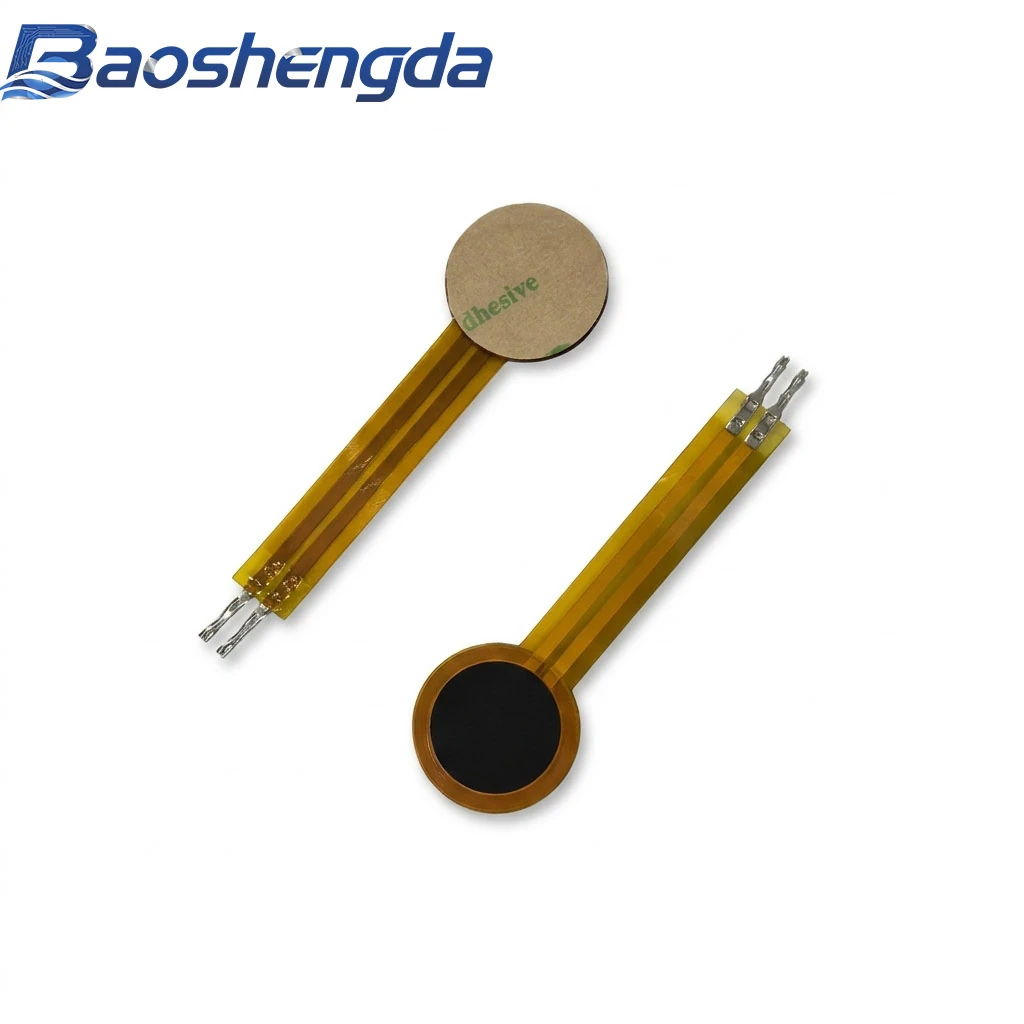
The cover is the site’s public round FSR sample front and back appearance example. It does not show an installation inside a seat, a state waveform or a passed threshold validation. Before a sample review, bring an assembly sketch, intended actions, available recording capabilities and fields still to be confirmed to a discussion of the customization and sampling process. Submit information through the project inquiry page. Confirm permission before sharing unreleased customer information.
This article supports project discussions. Materials, sensing range, construction and test conditions must be reviewed against your drawing and requirements.